

Executive summary
Since pioneering roll film at the end of the nineteenth century, Kodak has played a defining role in how people preserve personal experiences, transforming photography from a specialised activity into an everyday act of memory keeping.
Research suggests that physical media serve psychological functions that extend beyond information access alone. Physical objects may provide psychological benefits that extend beyond those offered by their digital representations because they can facilitate attentional engagement, emotional attachment, and autobiographical memory, the system through which individuals organise and revisit personal life experiences (Gomez et al., 2018; Van den Hoven et al., 2021). Over the following decades, cameras became increasingly portable and eventually integrated into smartphones and digital platforms. Our culture of carefully chosen moments, constrained by the limited exposures available on film, was replaced by spontaneous photographs that can be recorded, duplicated, and erased instantaneously. As the volume of stored images increases, the emotional and cognitive significance of individual photographs may decline. Recent evidence further suggests that excessive accumulation of digital content can contribute to forms of digital hoarding behaviour (van Bennekom et al., 2015) associated with emotional attachment, fear of missing out, and cognitive overload (Yu and Chang, 2025).
Photographs do more than document experiences; they also support identity, social connection, and emotional reflection. Memory formation depends heavily on attention and intentional engagement (Ericsson et al., 1993; Draganski et al., 2004). Studies on “photo-taking impairment effect” suggest that photographs captured with low attentional engagement are less likely to be remembered later (Henkel, 2014). To the point that, if we take a photo without any effort, a big purpose behind that gives meaning, we will forget it minutes later, even if we look at it (Soares and Storm, 2018).
Thus, we arrive at a paradox. Although individuals now carry more photographs than at any point in history, they may engage with them less meaningfully and remember them less vividly over time. The challenge, therefore, is not whether digital photography should be replaced, but how physical media may complement digital ecosystems by restoring emotional salience, intentionality, and memory value.
In June 2026, Memorify designed and conducted an online survey of 498 respondents to investigate consumers’ perceptions and use of printed photographs across 5 countries. The report focuses on data gathered from a subset of 419 participants who currently own or have previously owned at least one printed photograph. The study targeted consumers aged 18–24 years (244) and 35–55 years (236) across Australia (56), China (119), France (104), Germany (92), and the United States (127).
The study set out to gain greater understanding of psychological and cognitive effects of physical media in comparison with purely digital experiences, particularly:
- The role of printed photographs as memory cues, including their influence on autobiographical memory, nostalgia, and emotional recall;
- The contribution of haptics to consumer perception, exploring how touch shapes authenticity, ownership, emotional attachment, and perceived value;
- The future of physical printing, investigating how changing consumer behaviours and emerging technologies are reshaping the role of printed photographs.
Key findings
This white paper revealed the following about printing photographs:
- Memory gap: Consumers underestimate the memory benefits of printed photographs compared with digital images.
- Authenticity is key: Printed photographs are perceived as more authentic and emotionally meaningful than digital images.
- Printing persists: Printed photographs remain widely owned and valued across generations, including younger adults.
- Purposeful printing: Consumers increasingly reserve printed photographs for meaningful moments, relationships, milestones, gifting, and display, while relying on digital photography for everyday capture, backup and sharing.
- Digital complements print: Consumers see printed photographs as complementing digital photography, not replacing it.
The value of physical photographs as memory cues
While digital photography has made image capture effortless and unlimited, printed photographs may create stronger and more memorable experiences by encouraging greater attentional focus and engaging multiple sensory systems simultaneously. Research suggests that printed images can function as more effective memory retrieval cues, helping photographs retain emotional significance and autobiographical meaning over time.
Digital photography transformed human memory-sharing. Moments that once required deliberate capture can now be recorded, duplicated, and distributed globally within seconds. However, the growing abundance of digital images may reduce memorability and perceived value of individual photographs as effortless capture and infinite storage increasingly replace deliberate selection and reflection (Keightley & Pickering, 2014).
Photographs are processed primarily through visual systems, but their psychological impact extends far beyond simple image recognition. Viewing a photograph recruits distributed neural systems associated with visual perception, autobiographical memory, emotional processing, and personal meaning construction (Danker et al., 2010; St. Jacques et al., 2011). The brain continuously integrates visual, tactile, spatial, and contextual sensory information to construct meaningful experiences.
Print remains part of everyday life
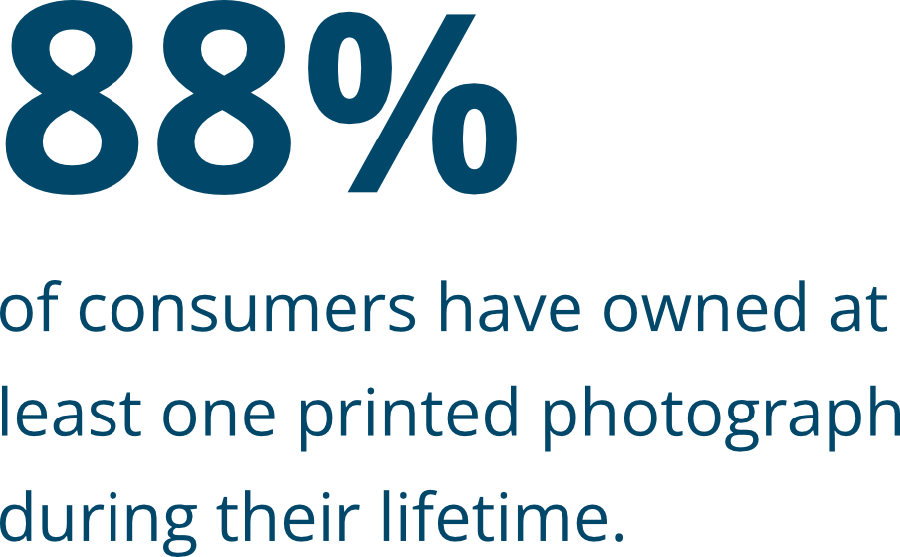
Ownership of printed photographs remains remarkably widespread despite the growth of digital photography. Across the five surveyed countries, 88% of respondents reported owning or having previously owned at least one printed photograph. This suggests that physical photographs continue to occupy an important place in consumers’ lives, providing an opportunity for print to evolve from a storage medium into a psychologically meaningful object.
The constraints of analogue photography, including limited exposures and the absence of constant digital interaction, encourage greater intentionality when a photo is taken (Henkel, 2014). This focus is necessary to make us remember. Unlike passive or automatic image capture, intentional photography encourages individuals to focus on emotionally or personally relevant elements of an experience. This may support stronger encoding of those moments into memory.
However, these benefits depend on how photographs are taken. When photography becomes overly automatic, socially performative, or distraction-driven, it may reduce immersion in the present moment and weaken memory encoding (Barasch, Zauberman, and Diehl, 2018). Research further suggests that engaging with social media during experiences, such as taking pictures during a tour of Stanford’s Memorial Church, can impair memory performance by around 10% (Tamir et al., 2018).

Consumers underestimate print’s memory value
Beyond the moment of capture, photographs can also function as tangible cues that trigger autobiographical recall and emotional reflection over time (Barasch, Zauberman, and Diehl, 2022). Research further indicates that reviewing photographs can strengthen memory for captured experiences, while curated photo albums may help individuals construct coherent personal narratives that support reminiscence and identity formation (Walker, 1989; Sherman, 1991; Holbrook, 2005). Research further suggests that printed materials are often processed more deeply and remembered more effectively than purely digital content (Singer and Alexander, 2017; Delgado et al., 2018). Consequently, printed photographs may function not merely as stored images, but as enduring autobiographical artefacts that reinforce emotional salience, memory accessibility, and personal meaning across time.
Although the scientific literature consistently demonstrates that physical photographs support autobiographical memory and emotional recall, it remains unclear whether consumers recognise these psychological benefits themselves.

Our research findings reveal a striking disconnection between scientific evidence and public perception. People seem to be unaware of the memory benefits of printed photographs. Consumers of our research expressed similar levels of confidence in their ability to remember events when viewing digital photographs and printed photographs. Older adults have the highest levels of confidence (60%) in their ability to recall events from digital or printed photographs in comparison to younger adults (34%). Perhaps pointing that the youngest generation is more aware of the fragility of memory with older adults being more “overconfident”.
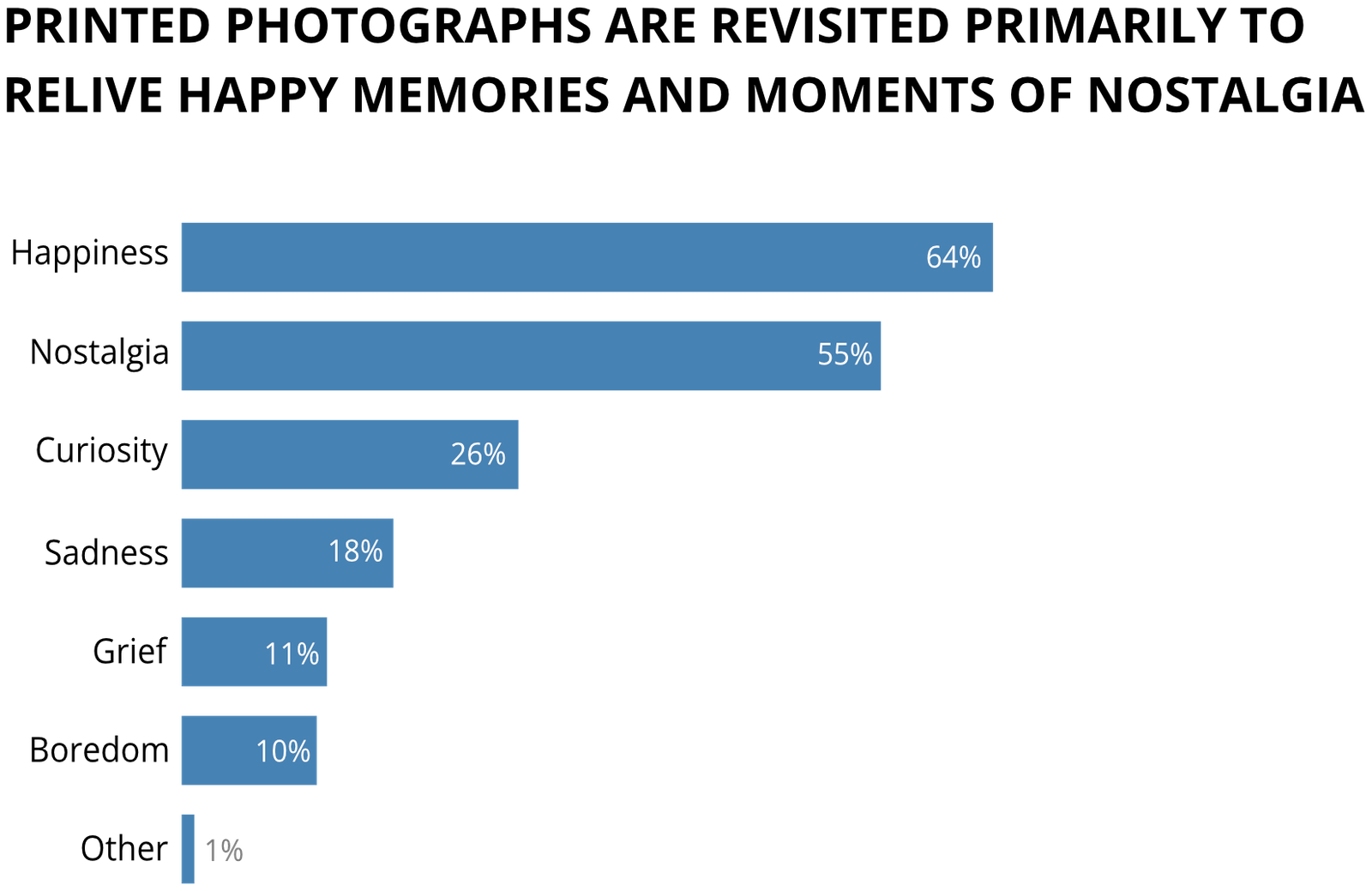
Unsurprisingly, our research found that positive emotions such as happiness (64%), nostalgia (55%) and curiosity (26%) are the main emotions to drive consumers to look to printed photographs, whereas comparatively few respondents reported negative emotions such as sadness (18%), grief (11%), or boredom (10%). However, despite happiness being the primary emotion to drive both young (74%) and older adults (78%) to look back to old printed photographs, a striking finding is that nostalgia is stronger in the young (73%) than in older adults (57%). Older adults also were more likely to revisit printed photographs due to curiosity (38%) than young adults (25%).
In this context, physical photographs may hold particular psychological importance because they provide stable and materially persistent representations of personal experiences. Unlike digital images that often remain hidden within smartphones and cloud storage systems, printed photographs occupy physical space, can be repeatedly revisited, and may acquire emotional significance through long-term interaction and sensory familiarity. Consequently, nostalgia associated with physical photographs may not simply reflect longing for the past, but also a desire to preserve meaningful experiences in forms perceived as authentic, enduring, and emotionally tangible.
A physical photograph is more than just an image
Printed photographs engage the brain differently from purely digital images because they are experienced not only visually, but materially. When we handle a physical photo, we are not just seeing the images. Tactile information is also being processed by our sensory systems associated with touch (Sathian and Lacey, 2007). Printed photographs therefore engage additional sensory pathways that are absent or substantially reduced during purely digital viewing experiences. Through touch, texture, weight, ageing, and repeated physical interaction, printed photographs become more than stored images; they become sensory artefacts embedded within autobiographical memory itself. Collectively, the scientific literature and our survey findings suggest that the enduring value of printed photographs lies not simply in preserving visual information, but in strengthening the emotional, cognitive, and sensory processes through which people remember their lives.

Haptics and consumer perception
Printed photographs engage consumers beyond visual perception alone. By enabling tactile interaction, printed images activate sensory, emotional, and ownership-related processes that can increase perceived authenticity, emotional attachment, willingness-to-pay, and long-term personal value.
Despite the convenience and accessibility of digital products, physical goods appear to maintain strong consumer appeal across multiple industries. In music culture, LPs and CDs often function as markers of identity and personal taste among collectors (Giles, Pietrzykowski, and Clark, 2007). The distinction between physical books and e-books reflects broader psychological differences in how consumers experience ownership, engagement, and permanence. Studies comparing physical books and e-books show that consumers consistently prefer printed books for gifting, collecting, sharing, and long-term ownership (Kim et al., 2021; Amirtharaj et al., 2023). Importantly, the most frequently reported reason for preferring printed books was the tactile enjoyment associated with physically handling them. Research further suggests that readers often demonstrate deeper comprehension and information processing when engaging with printed material rather than digital formats (Fontaine et al., 2021; Clinton-Lisell and Litzinger, 2026).
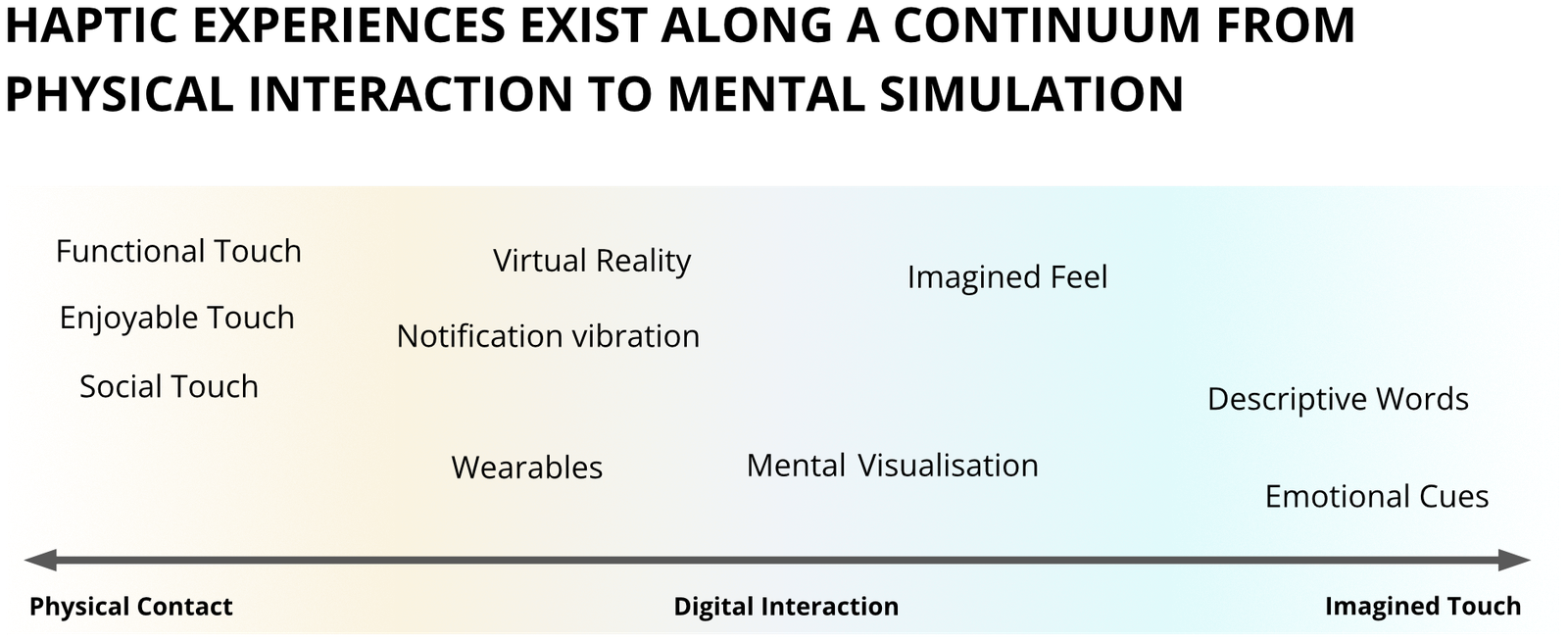
As digital technologies evolved, researchers began to observe that our brains process touch differently depending on the sensory and psychological context involved. A real touch occurs when receptors on our skin, muscle, tendons and joints encounter a physical object. Even if we are touching a smartphone to watch our favourite photograph, the tactile interaction occurs primarily with the device itself rather than with the image as a physical object. However, touch is not limited to direct physical contact alone. Humans can also mentally simulate tactile sensations when imagining textures such as softness, roughness, or weight. As a result, haptic experiences emerge and exist along a continuum, from direct physical interaction to entirely imagined experiences.
A simple touch can change the value of a product
Within marketing and product development, physical interaction with a product plays a central role in consumer evaluation. The mere fact that an object can be touched can substantially influence consumer perception and behaviour. Tactile interaction allows consumers to infer product quality and can significantly influence willingness to pay (Grohmann et al., 2007). Similarly, increased familiarity generated through touch has been associated with higher purchase intention and higher product valuation (Müller, 2013).
The psychological effects of touch may extend beyond sensory evaluation alone. When we can touch something, even if it is not ours, we may begin to develop a sense of ownership towards it, even in the absence of legal possession. This phenomenon is known as psychological ownership, a psychological state in which individuals perceive objects, ideas, or spaces as personally ‘theirs’ (Peck and Shu, 2009). Research demonstrates that individuals assign greater monetary value to products such as chocolate bars and coffee mugs after physically holding them, regardless of whether ownership was formally assigned (Reb and Connolly, 2007). Interestingly, taking the owned product away can reduce feelings of ownership and emotional attachment.
Consumers think they can replace printed photos
The influence of touch on psychological ownership raises an interesting question: do consumers perceive printed photographs as more emotionally irreplaceable than digital images? Our survey suggests they do not. Respondents reported very similar levels of difficulty when asked how they would feel about losing a printed photograph compared with a digital one. 35% of young respondents found that losing a printed photo is difficult, with 40% saying the same for a digital picture. Moreover, 37% of older respondents find it difficult to lose a printed photograph, with 32% saying the same for digital versions. One possible explanation is that many participants assumed printed photographs could simply be reproduced from digital backups.
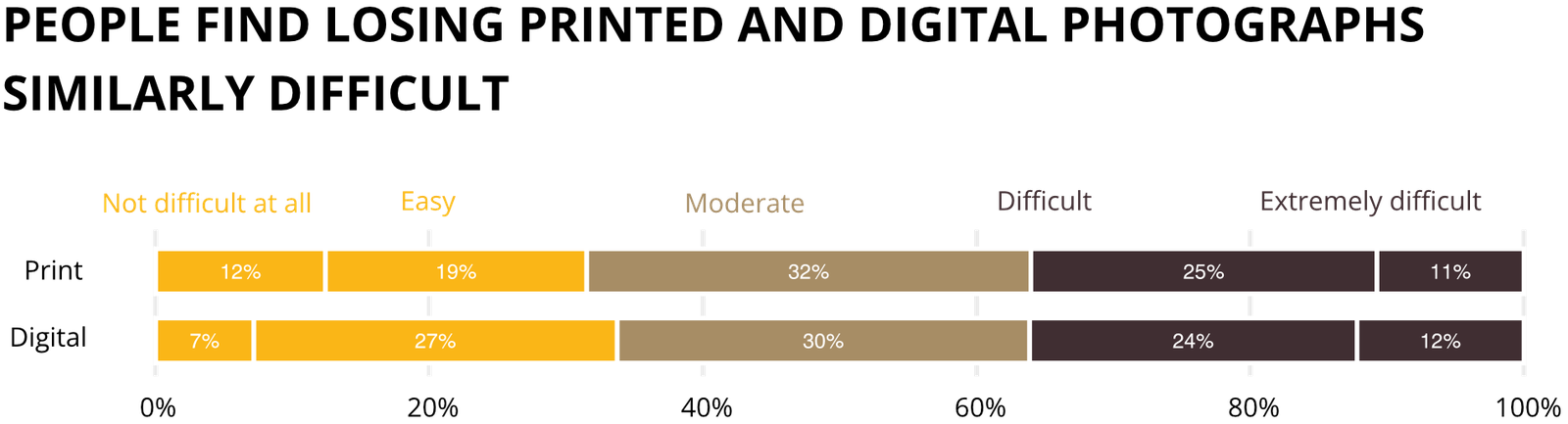
This finding highlights an important distinction between perceived replaceability and psychological value. Although consumers may believe a printed photograph can be replaced, research suggests that repeated physical interaction, sensory familiarity, and emotional attachment can give individual prints a significance that extends beyond the visual image itself.
The relationship between touch and ownership appears sufficiently strong that observing another individual interact with a psychologically owned object may trigger perceptions of territorial infringement (Kirk et al., 2018). In summary, touch can lead to psychological ownership of a product. Thus, what happens when you cannot touch it? People value them less.
Research demonstrates that tourists donate more frequently and contribute larger amounts to charity when receiving physical rather than digital photographs as souvenirs (Atasoy and Morewedge, 2018). Participants in the same study also expressed greater willingness-to-pay for physical versions of books and films compared to digital versions.
Printed photos are more authentic
Similarly, printed photographs are often perceived as more authentic, emotionally meaningful, and creatively valuable than digitally presented equivalents. In one study, participants rated photographs described as physical prints as more authentic even when both stimuli were presented digitally on-screen (Groth et al., 2023). Interestingly, this effect persisted even when participants were informed that the original image had initially been captured digitally before being printed. These findings suggest that the perceived materiality of an image may alter emotional and cognitive evaluation even in the absence of direct tactile interaction.
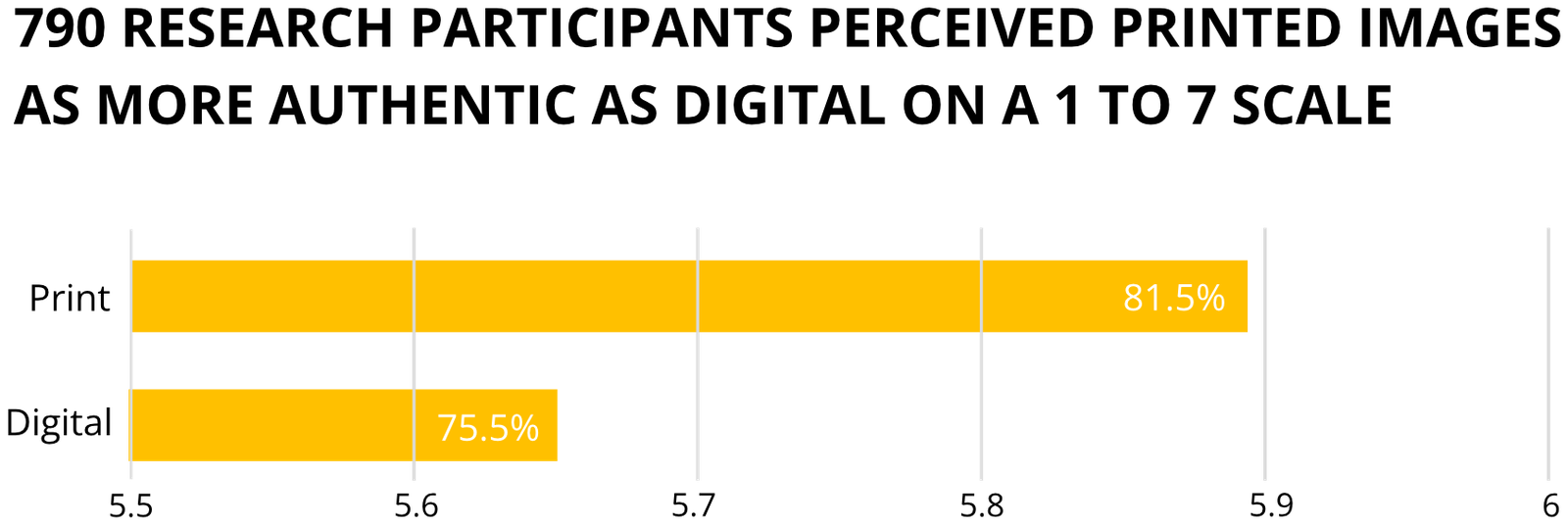
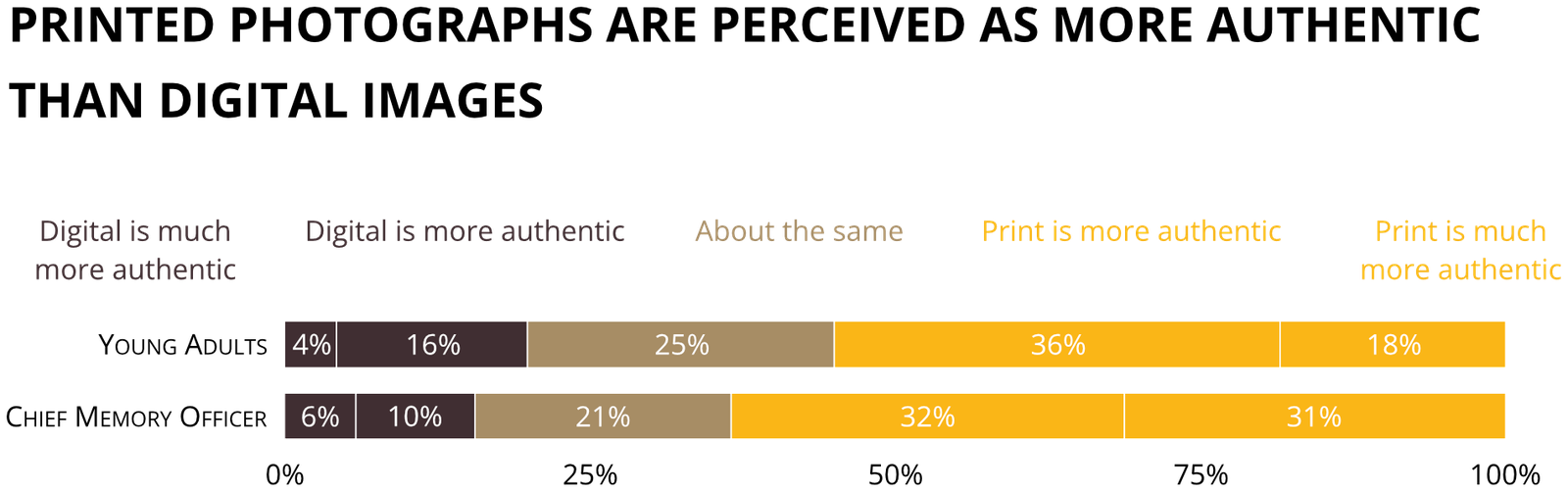
Our findings closely mirror these observations. Participants consistently rated printed photographs as more authentic than digitally displayed photographs, despite evaluating the same image content. Together, these findings suggest that perceptions of authenticity arise not only from the image itself but also from its material form.
People want both printed and digital versions of a photograph
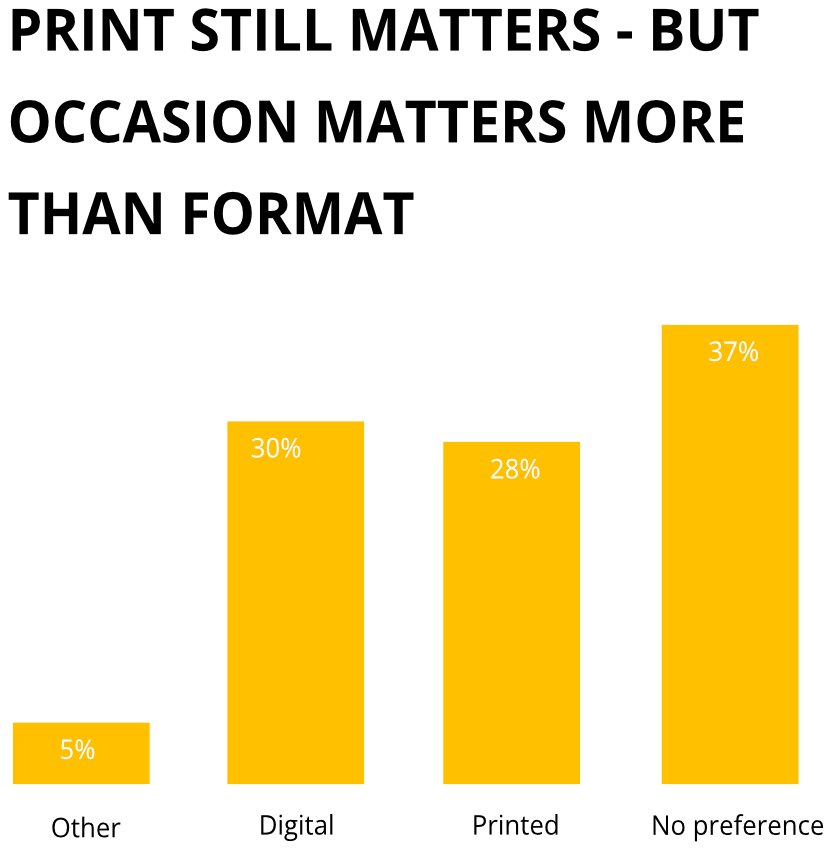
These psychological differences are also reflected in consumers’ preferences for receiving photographs. When asked how they would prefer to receive a photograph taken by someone else, 37% of respondents preferred a combination of both printed and digital formats, while 30% preferred a printed photograph only and 28% preferred a digital copy only. Only a minority (5%) reported having no preference. These findings suggest that consumers increasingly view printed and digital photographs as complementary rather than competing formats. Digital images offer convenience and immediacy, whereas printed photographs feel authentic, lasting, and meaningful.
Taken together, the scientific literature and our survey findings suggest that the value of printed photographs extends well beyond their role as visual records. Their physical presence influences how people perceive authenticity, develop emotional attachment, and interact with memories over time. Rather than competing with digital photography, printed photographs appear to offer complementary psychological benefits that arise from their materiality, permanence, and presence in everyday life.
The future of physical printing
As digital imagery becomes increasingly abundant, automated, and ephemeral, the value of physical printing may shift from information storage towards something fundamentally psychological: authenticity, permanence, tactile engagement, emotional resonance, and trusted preservation of lived experience.
Historically, physical printing was created to answer the question: “How do I preserve my memories?”. Over the last two decades, however, consumers increasingly migrated towards cloud storage, smartphones, and digital ecosystems capable of storing virtually unlimited numbers of images. As digital storage became ubiquitous, the role of physical printing began to change. Thus, printing needs to shift from a storage solution to something else. So, what is next for the sector?
Print remains part of our lives
Interestingly, younger generations who grew up entirely within digital environments are rediscovering analogue aesthetics and physical formats. The resurgence of vinyl records, instant photography, film cameras, and printed photo books suggests that physical media continue to hold psychological and cultural value even among digitally native consumers. Rather than rejecting technology, younger consumers appear to be seeking experiences that provide greater intentionality, materiality, and emotional permanence within increasingly fast and transient digital environments.
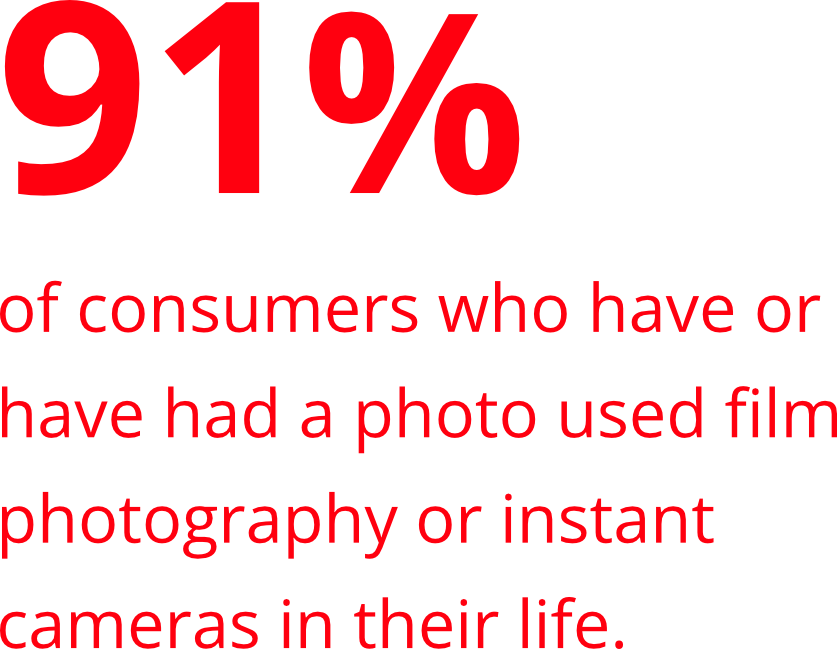
Our findings reinforce this trend. Overall, 91% of respondents had used film photography or an instant camera in their lives. Even among younger adults aged 18–24 years, 85% reported prior experience with film or instant photography, compared with 98% of respondents aged 35–55 years. Although familiarity with analogue photography is understandably lower among younger generations, the difference is smaller than expected given that smartphones have become the primary camera for most consumers. This finding suggests that analogue photography continues to form part of the experience of digitally native generations rather than representing a practice confined to older consumers.
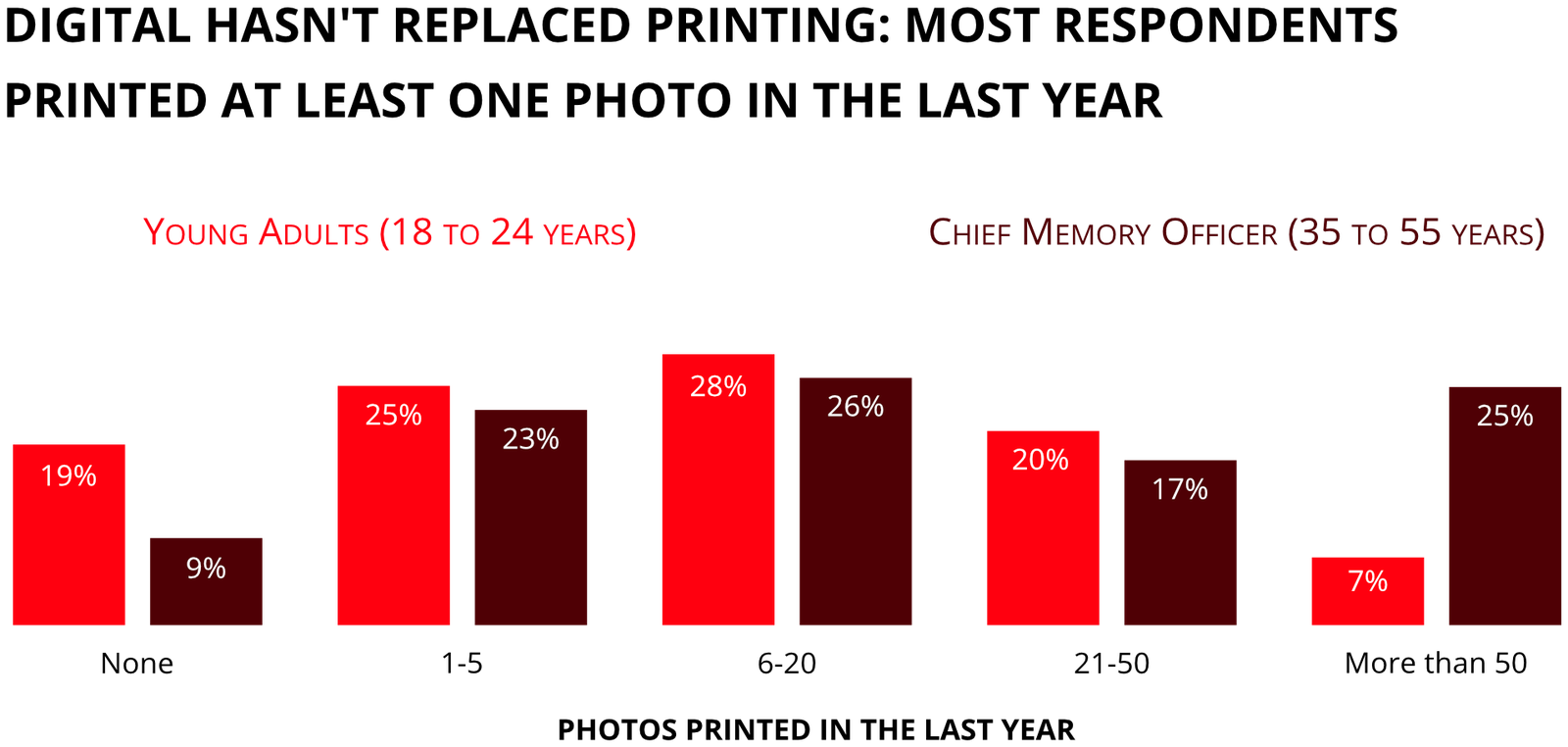
Furthermore, printing continues to be a common behaviour rather than a disappearing one. Most respondents reported printing at least one photograph during the previous 12 months, while 96% reported owning at least one printed photograph. 27% of young adult print more than 20 photographs each year, compared to 42% of their counterpart, chief memory officers. Together, these findings suggest that digital photography has not eliminated printing but has changed the role it plays in consumers’ lives.
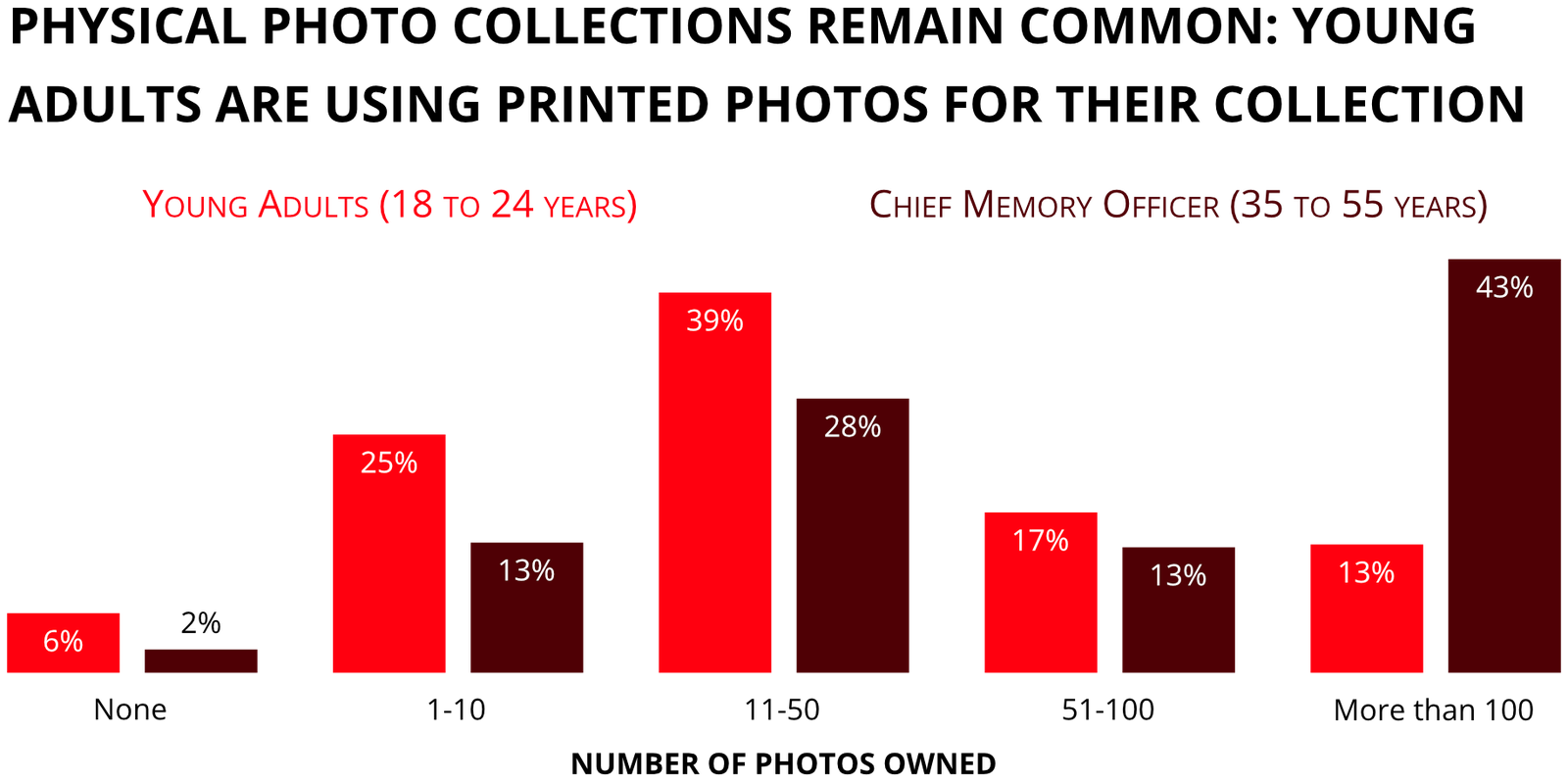
Similarly, 43% of respondents reported owning more than 50 printed photographs, indicating that sizeable printed photograph collections remain common despite decades of digital image storage. As expected, collection size differed across generations: 56% of respondents aged 35–55 owned more than 50 printed photographs, compared with 30% of those aged 18–24. This difference is likely to reflect the time required to build a personal collection rather than a declining interest in printed photographs.
Printing offers an intentional selection that was lost
Recent behavioural research suggests that consumers are becoming increasingly selective about how they engage with digital content and social media platforms (Fu et al., 2020; Ou et al., 2023; Qin et al., 2025). As individuals become exposed to growing volumes of transient images and algorithmically mediated content, physical printing may acquire renewed value precisely because it introduces scarcity, intentionality, and permanence into visual communication (Beverland et al., 2024). Rather than printing every image, consumers may increasingly choose to print photographs associated with personally meaningful experiences, relationships, and milestones they wish to preserve beyond the digital stream.
The emergence of artificial intelligence-generated imagery may further strengthen the symbolic importance of physical photographs. As synthetic images become increasingly indistinguishable from authentic visual records (Kramer et al., 2025), printed photographs may acquire greater value as markers of authenticity, permanence, and provenance. Material photographs possess physical characteristics such as texture, ageing, handling, and environmental history that are substantially more difficult to replicate within purely digital systems (Lira Pereira et al., 2026).
Consumers feel more emotionally connected with printed photos
Unlike digital images that often remain hidden within smartphones, cloud archives, or social media feeds, printed photographs occupy physical environments and become integrated into everyday life through repeated interaction (Petrelli et al., 2008). Over time, photographs displayed within homes, workplaces, albums, and personal objects may accumulate emotional significance through sensory familiarity, touch, and repeated autobiographical retrieval (Sathian & Lacey, 2007). Their psychological value therefore emerges not only from the image itself, but also from the long-term physical relationship individuals develop with them.
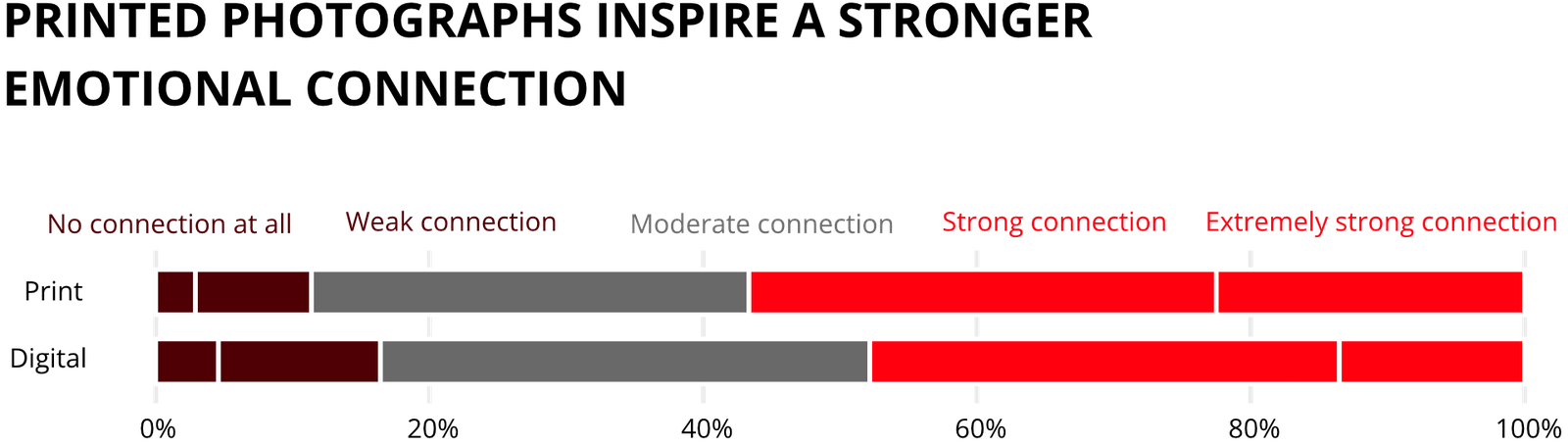
Our survey supports this idea. Respondents reported a stronger personal and emotional connection when imagining their photographs as physical prints than when viewing the same images as digital files. The findings suggest that printing changes not only how photographs are stored, but also how people relate to them emotionally.
Why do people print?
If printed photographs create stronger emotional connections, what makes people decide that a photograph is worth printing in the first place? Our survey suggests that consumers print photographs with a clear purpose rather than as a routine activity. The most frequently reported reasons were preserving important memories (63%), giving photographs as gifts (43%), and displaying them in homes (41%) or workplaces.
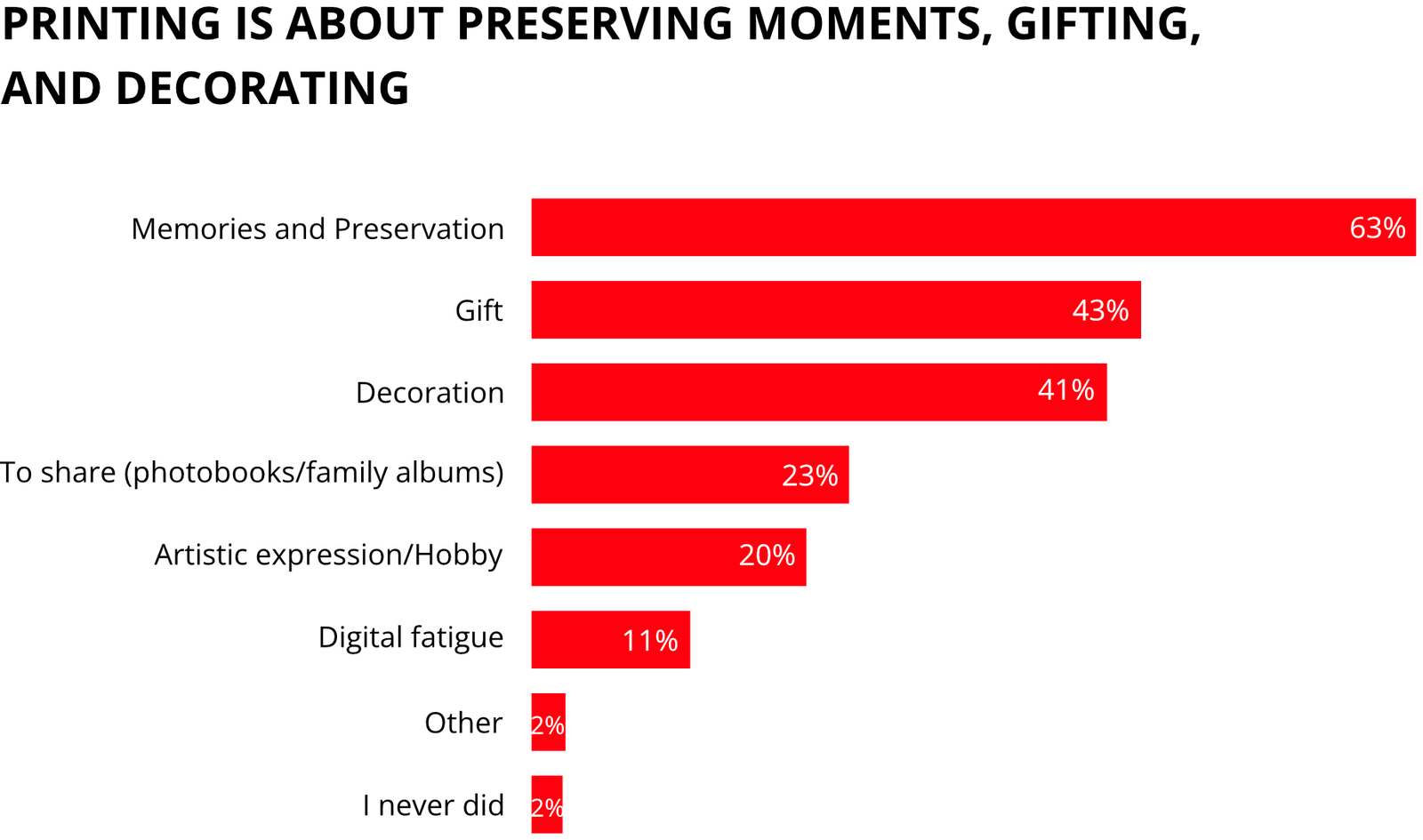
But what kinds of photographs make the cut? Interestingly, respondents rarely mentioned technical image quality or aesthetic appeal. Instead, their answers centred on family, important life events, holidays, children, weddings, birthdays, loved ones, and meaningful moments. These responses suggest that consumers increasingly view printing as a way of assigning lasting significance to selected experiences rather than simply reproducing digital files.
Beyond personal memory preservation, physical printing continues to play an important role across professional sectors in which permanence, trust, traceability, and precision remain critical. Industries including healthcare, archival preservation, industrial imaging, education, luxury branding, and fine art continue to rely on physical media because digital formats may become technologically obsolete, corrupted, or inaccessible over time.
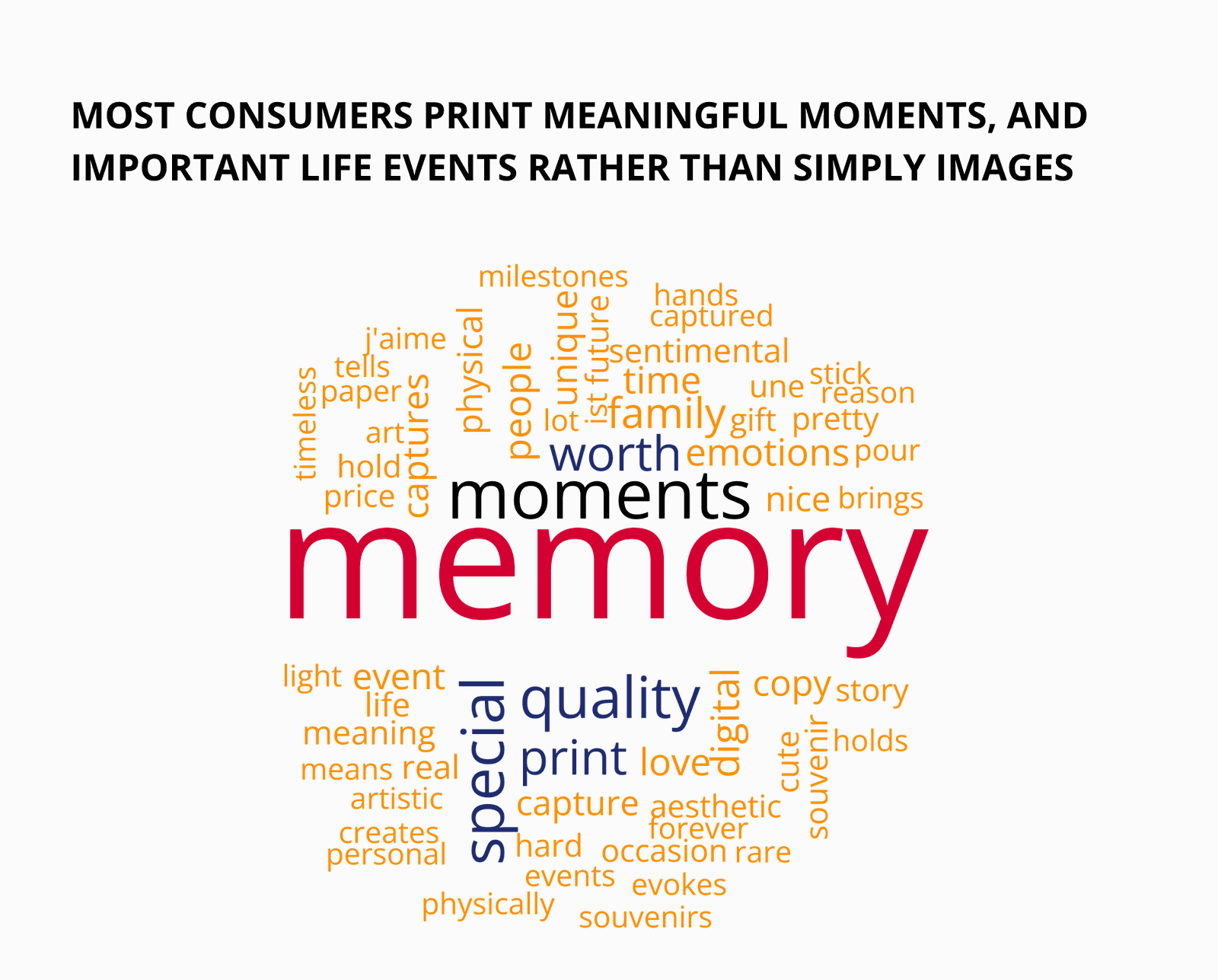
Ultimately, the future relevance of physical printing may lie not in resisting digital innovation, but in complementing it by supporting uniquely human psychological needs. As digital imagery becomes increasingly abundant, instantaneous, and ephemeral, the psychological value of physical media may increase rather than disappear. In increasingly virtual environments, printed photographs may continue to provide something fundamentally human: permanence, sensory presence, emotional resonance, and the ability to transform fleeting experiences into enduring autobiographical artefacts.
Conclusion
Photography has changed more in the last two decades than at any other point since the invention of roll film. Smartphones, cloud storage, artificial intelligence, and social media have transformed how images are captured, shared, and stored. Consumers now create and access more photographs than ever before, yet the psychological role of photography appears to be evolving rather than disappearing.
The scientific evidence reviewed throughout this report suggests that physical photographs provide psychological benefits that extend beyond visual information alone. Printed photographs support autobiographical memory, engage multiple sensory systems, strengthen emotional attachment, and become integrated into everyday life through repeated interaction.
Our survey findings reinforce this distinction. Consumers continue to own printed photographs, print images every year, and associate physical prints with authenticity, emotional connection, and personally meaningful experiences. Rather than printing everyday images, consumers increasingly reserve print for family, important life events, gifts, and moments they wish to preserve beyond the fast-moving digital environment. Printing has become more intentional, making each printed photograph potentially more valuable than before.
These findings suggest that the future of physical printing does not depend on replacing digital photography. Instead, digital and printed photography increasingly operate as complementary experiences. Digital technologies provide speed, convenience, accessibility, and long-term storage, while physical prints offer permanence, material presence, and emotional significance. Our survey further suggests that many consumers do not perceive digital and printed photographs as mutually exclusive. Respondents who preferred receiving photographs digitally frequently explained that they could always print them later if they wished, while also benefiting from the security of having a digital backup.
For organisations across the imaging industry, this shift represents an opportunity to rethink the role of printing. The future of printed photographs may lie less in archiving large collections and more in helping consumers transform selected memories into tangible objects that can be displayed, shared, gifted, and revisited over time. Products and services that reinforce authenticity, personal storytelling, and emotional connection are therefore likely to become increasingly relevant.

Ultimately, the value of a photograph has never resided solely in the image itself. It lies in the experiences it represents, the memories it preserves, and the meaning people attach to it throughout their lives. In an increasingly digital world, the enduring role of physical printing may be not to compete with technology, but to preserve the moments that matter most in forms that remain tangible, trusted, and deeply human.
References
Amirtharaj, A. D., Raghavan, D., & Arulappan, J. (2023). Preferences for printed books versus E–books among university students in a Middle Eastern country. Heliyon, 9(6).
Atasoy, O., & Morewedge, C. K. (2018). Digital goods are valued less than physical goods. Journal of Consumer Research, 44(6), 1343–1357.
Barasch, A., Zauberman, G., & Diehl, K. (2018). How the intention to share can undermine enjoyment: Photo-taking goals and evaluation of experiences. Journal of Consumer Research, 44(6), 1220–1237.
Chopra-Gant, M. (2016). Pictures or it didn’t happen: Photo-nostalgia, iPhoneography and the representation of everyday life. Photography and Culture, 9(2), 121–133.
Clinton-Lisell, V., & Litzinger, C. (2026). Decoding digital reading: a network meta-analysis of comprehension across devices. Education and Information Technologies, 1–33.
Danker, J. F., & Anderson, J. R. (2010). The ghosts of brain states past: remembering reactivates the brain regions engaged during encoding. Psychological Bulletin, 136(1), 87.
Delgado, P., Vargas, C., Ackerman, R., & Salmerón, L. (2018). Don’t throw away your printed books: A meta-analysis on the effects of reading media on reading comprehension. Educational Research Review, 25, 23–38.
Draganski, B., Gaser, C., Busch, V., Schuierer, G., Bogdahn, U., & May, A. (2004). Changes in grey matter induced by training. Nature, 427(6972), 311–312.
Ericsson, K. A., Krampe, R. T., & Tesch-Römer, C. (1993). The role of deliberate practice in the acquisition of expert performance. Psychological Review, 100(3), 363.
Fontaine, G., Zagury-Orly, I., Maheu-Cadotte, M. A., Lapierre, A., Thibodeau-Jarry, N., De Denus, S., … & Lavoie, P. (2021). A meta-analysis of the effect of paper versus digital reading on reading comprehension in health professional education. American Journal of Pharmaceutical Education, 85(10), 8525.
Giles, D. C., Pietrzykowski, S., & Clark, K. E. (2007). The psychological meaning of personal record collections and the impact of changing technological forms. Journal of Economic Psychology, 28(4), 429–443.
Gomez, M. A., Skiba, R. M., & Snow, J. C. (2018). Graspable objects grab attention more than images do. Psychological Science, 29(2), 206–218.
Grohmann, B., Spangenberg, E. R., & Sprott, D. E. (2007). The influence of tactile input on the evaluation of retail product offerings. Journal of Retailing, 83(2), 237–245.
Groth, O. H., Block, L., & Newman, G. E. (2023). Lost in digitization: The physical format of creative work affects authenticity perceptions. Psychology of Aesthetics, Creativity, and the Arts.
Henkel, L. A. (2014). Point-and-shoot memories: The influence of taking photos on memory for a museum tour. Psychological Science, 25(2), 396–402.
Holak, S. L., & Havlena, W. J. (1992). Nostalgia: An exploratory study of themes and emotions in the nostalgic experience. Advances in Consumer Research, 19(1).
Holbrook, M. B. (2005). Customer value and autoethnography: subjective personal introspection and the meanings of a photograph collection. Journal of Business Research, 58(1), 45–61.
Keightley, E., & Pickering, M. (2014). Technologies of memory: Practices of remembering in analogue and digital photography. New Media & Society, 16(4), 576–593.
Kim, J., Seo, J., Zo, H., & Lee, H. (2021). Why digital goods have not replaced traditional goods: the case of e-books. Journal of Enterprise Information Management, 34(3), 793–810.
Kirk, C. P., Peck, J., & Swain, S. D. (2018). Property lines in the mind: Consumers’ psychological ownership and their territorial responses. Journal of Consumer Research, 45(1), 148–168.
Krishna, A., Luangrath, A. W., & Peck, J. (2024). A review of touch research in consumer psychology. Journal of Consumer Psychology, 34(2), 359–381.
Müller, H. (2013). The real-exposure effect revisited—How purchase rates vary under pictorial vs. real item presentations when consumers are allowed to use their tactile sense. International Journal of Research in Marketing, 30(3), 304–307.
Peck, J., & Shu, S. B. (2009). The effect of mere touch on perceived ownership. Journal of Consumer Research, 36(3), 434–447.
Reb, J., & Connolly, T. (2007). Possession, feelings of ownership and the endowment effect. Judgment and Decision Making, 2(2), 107–114.
Sathian, K., & Lacey, S. (2007). Journeying beyond classical somatosensory cortex. Canadian Journal of Experimental Psychology, 61(3), 254.
Sedikides, C., & Wildschut, T. (2019). The sociality of personal and collective nostalgia. European Review of Social Psychology, 30(1), 123–173.
Sherman, E. (1991). Reminiscentia: Cherished objects as memorabilia in late-life reminiscence. The International Journal of Aging and Human Development, 33(2), 89–100.
Soares, J. S., & Storm, B. C. (2018). Forget in a flash: A further investigation of the photo-taking-impairment effect. Journal of Applied Research in Memory and Cognition, 7(1), 154–160.
St. Jacques, P. L., Conway, M. A., Lowder, M. W., & Cabeza, R. (2011). Watching my mind unfold versus yours: An fMRI study using a novel camera technology to examine neural differences in self-projection of self versus other perspectives. Journal of Cognitive Neuroscience, 23(6), 1275–1284.
Tamir, D. I., Templeton, E. M., Ward, A. F., & Zaki, J. (2018). Media usage diminishes memory for experiences. Journal of Experimental Social Psychology, 76, 161–168.
van Bennekom, M. J., Blom, R. M., Vulink, N., & Denys, D. (2015). A case of digital hoarding. Case Reports, 2015, bcr2015210814.
Van den Hoven, E., Orth, D., & Zijlema, A. (2021). Possessions and memories. Current Opinion in Psychology, 39, 94–99.
Varnalis-Weigle, A. S. (2016). A comparative study of user experience between physical objects and their digital surrogates. Journal of Contemporary Archival Studies, 3(1), 3.
Vess, M., Arndt, J., Routledge, C., Sedikides, C., & Wildschut, T. (2012). Nostalgia as a resource for the self. Self and Identity, 11(3), 273–284.
Walker, A. L. (1989). Photo albums: Images of time and reflections of self. Qualitative Sociology, 12(2), 155–182.
Yang, Z., Izuma, K., & Cai, H. (2023). Nostalgia in the brain. Current Opinion in Psychology, 49, 101523.
Yu, W., & Chang, X. (2025). Exploration of factors of digital photo hoarding behavior among university students and the mediating role of emotional attachment and fear of missing out. Frontiers in Psychology, 16, 1607274.